Wood and Trim Remodeling in Central Texas
Baseboard, casing, crown, paneling, built-ins and stair parts, cut to fit rooms that are never perfectly square.
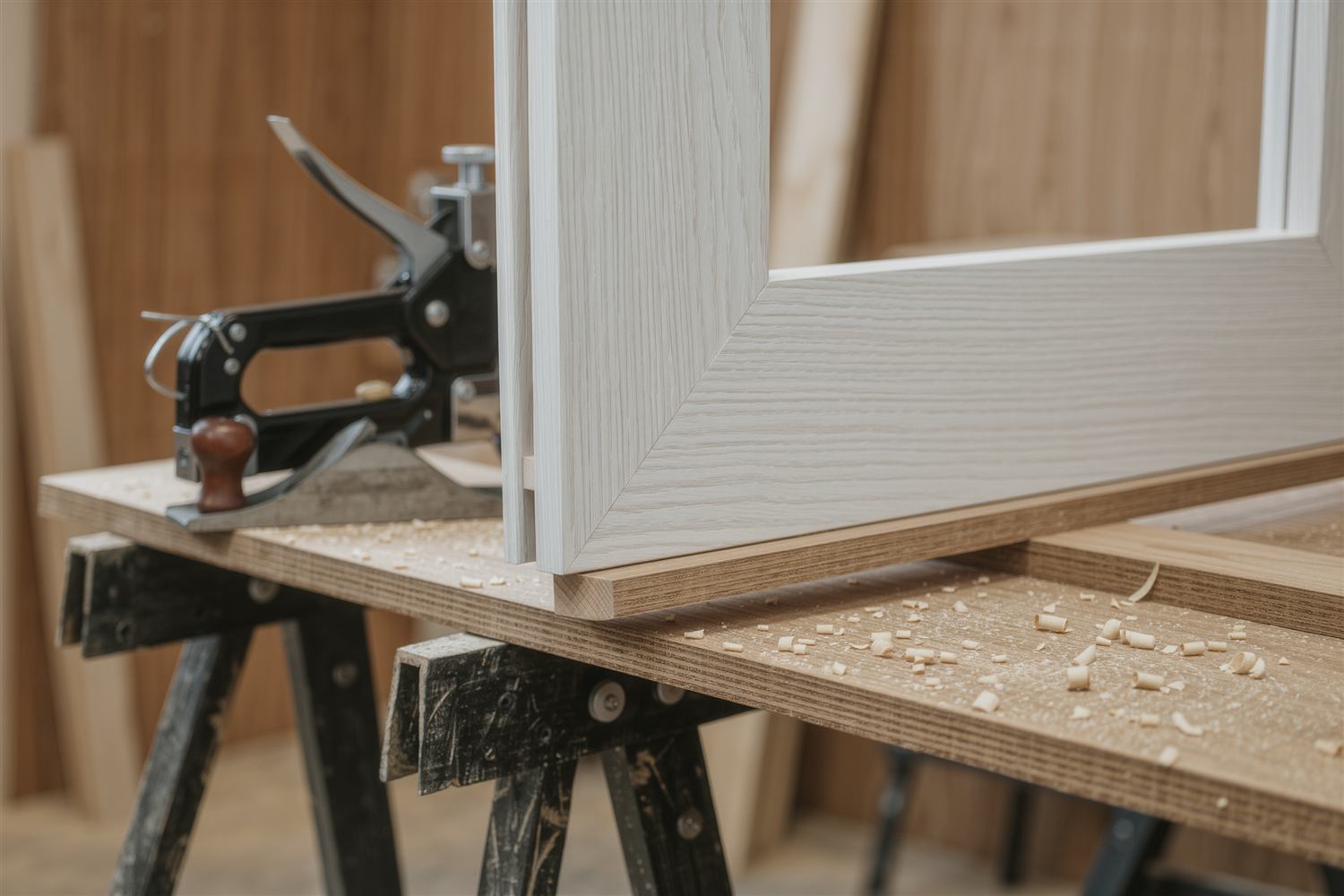
What the work covers
Trim is the part of a room people look at without noticing, until it is wrong. A baseboard with a gap at the wall, a corner that has opened up or a casing that does not match the door next to it makes a finished room look unfinished. Wood remodeling is the work that closes those gaps: baseboards, door and window casing, crown molding, wainscot and paneling, mantels, shelving, built-in cabinets and stair parts.
Almost no room is square. Walls lean, floors dip and ceilings follow the roof above them, and the trim carpenter's job is to follow those lines without letting the eye see them. Boards are scribed to the wall, joints are cut to the real angle instead of the nominal ninety degrees, and long runs are laid out so seams fall where they are least visible. Nail holes are filled, joints are caulked on painted work and the finish is applied in clean passes with sanding between coats.
Built-ins are where trim becomes furniture. A bookcase around a window, a bench and cabinets at a back door, shelving in a closet or a mantel around a fireplace each start with a drawing and a set of measurements taken from the room as it actually is. We build them to fit the space and tie them into the wall studs, and we plan around any outlets, switches and vents they cover.
Wood, finish and humidity
Wood moves, and the choices below decide whether it moves quietly.
Species and grade depend on the finish. Paint-grade work uses poplar, pine or MDF, which take paint smoothly and cost less. Stained work uses oak, maple, walnut or other woods with a grain worth showing, and the boards are chosen so color and figure match across a run. MDF is stable and cheap but swells if water reaches an unsealed edge, so it stays out of damp areas.
Central Texas swings between humid summers and dry, cold snaps, and boards take on and lose moisture with the season. Trim is brought into the house and left to settle before it is cut where the schedule allows, joints are glued as well as nailed, and the finish is applied to every face, not just the visible one, so the wood takes up moisture evenly.
Matching existing trim is a common request. Older homes in Georgetown, San Marcos and Bastrop often have profiles that are no longer stocked, and a new run next to an old one has to match in height, projection and detail. We take samples of the original and have knives ground, or combine stock pieces, to get close enough to leave no visible seam.
How a wood and trim job runs
Measure the room
We measure walls, openings and floor lines as they actually are and agree on profiles, species and finish.
Mill and prefit
Boards are cut, scribed and fitted, with joints checked dry before anything is glued or nailed.
Install and fill
Trim and built-ins go in, nail holes and joints are filled and caulked, and surfaces are sanded smooth.
Finish and inspect
Primer and paint or stain go on, and we go through the room with you before we leave.
Permits and rules for wood and trim
Austin's list of work exempt from building permits includes finish work in one- and two-family homes such as painting, papering, cabinets and countertops, and exempt work must still meet the building code. Built-ins that cover electrical boxes, vents or gas lines, or that tie into a structural wall, can bring the work under a trade permit or a building permit. On a historic property, changes to exterior woodwork can need a Certificate of Appropriateness first, as Round Rock and Bastrop both note.
Sources: [1] austintexas.gov [2] roundrocktexas.gov [3] cityofbastrop.org
Where we quote this work
Wood and Trim Remodeling is quoted across four Central Texas counties. Each town page has its permit office, neighborhoods and the building context that shapes a project there.
Related work: Door Installation, Window Installation, Demolition, Flooring, Interior Remodeling.
Questions about wood and trim work
Should I paint or stain new trim?
Paint hides imperfections and suits most rooms and budgets. Stain shows the grain and works best in rooms with wood doors, wood floors or built-ins. The choice also decides the wood: paint-grade species cost less, and stain-grade boards are selected for color and figure.
Is MDF or solid wood better for baseboards?
Both work. MDF is smooth, stable and takes paint well, and it is the usual choice for painted baseboard in dry rooms. Solid wood handles damp areas and impact better, and it is the choice for stained work and for anything that will be refinished over the years.
Can you match the trim already in my house?
Often, yes. We take a sample of the existing profile, compare it to stock moldings and have a knife ground when none matches. In older houses the original profile may be one that is no longer made, so the first step is a look at what is there.
How long do built-ins take?
A simple shelving unit can take a few days. A built-in with cabinets, doors and custom trim usually takes longer because of drawing, material lead time and finishing. The quote gives dates for each stage.
Do you do exterior woodwork?
We cover interior wood and trim here. Exterior wood such as fascia and porch posts faces sun and rain on a different scale, and we quote it separately after looking at it.
Tell us about the project
Describe the work and the town. We follow up using the phone number you provide.
Martinez & Sons Remodeling1190 Airport Blvd #214
Austin, TX 78702