Interior Demolition in Central Texas
Controlled tear-out for kitchens, baths, walls, ceilings and floors, planned so the remodel behind it can start clean.
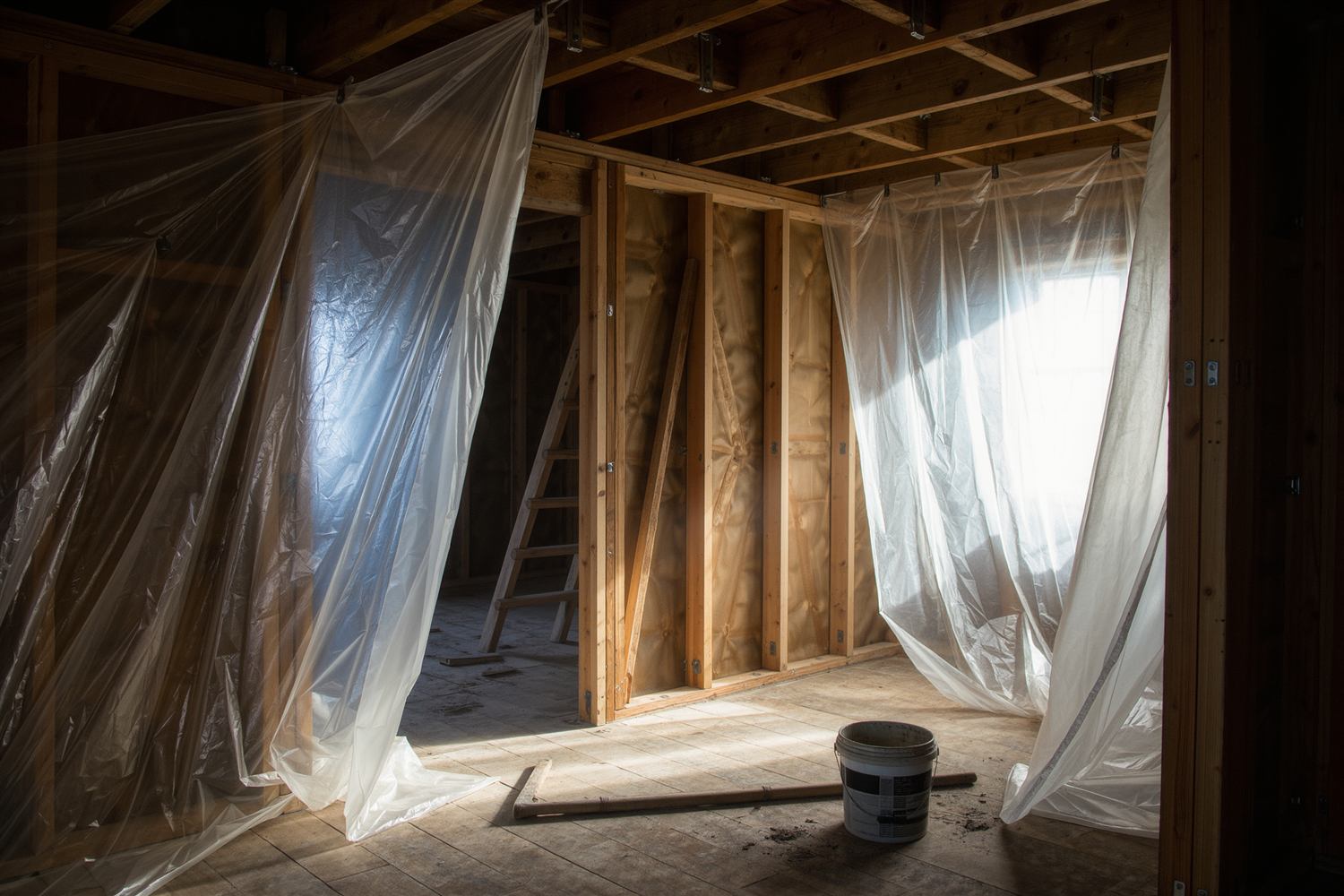
What the work covers
Demolition is the first day of a remodel and the day that decides how the rest goes. Done carelessly, it cracks the plaster you meant to keep, cuts a wire nobody marked and sends dust through every room. Done carefully, it exposes the real condition of the house in a controlled way, so the framing, plumbing and wiring that the new work depends on can be inspected before anything is covered up again.
Our demolition work is mostly selective and interior: kitchens down to the studs, bathrooms down to the slab or subfloor, flooring pulled up, ceilings and soffits removed, and walls taken out or opened. Before the first swing we confirm which circuits and water lines are off and who is shutting them off, which wall is bearing and which is not, and which surfaces are staying and need protection. Plastic barriers, floor protection and a path for debris out of the house go up first.
Hidden conditions are the part of demolition no estimate can fully price. Old wiring, galvanized supply lines, water staining behind a tub, insect damage in a sill plate and patched-over framing turn up often enough that the scope includes a plan for what happens when one does. We stop, show you what was found and write down what it changes before the work goes on.
What gets checked before anything comes down
A short list of questions that prevent most demolition surprises.
- Bearing walls
- Electrical circuits
- Water and gas lines
- Asbestos in older materials
- Lead paint
- Dust control
- Haul-off
Removing a wall is a structural decision before it is a carpentry task. Round Rock's remodel page states that structural modifications, with wall removal given as the example, require an engineered design. If a wall carries the roof, the floor above or a beam, it needs a plan for temporary support, a header or beam sized for the load, and permit review. We do not guess at which walls are bearing.
Age matters as well. For homes built before 1980, Round Rock's page strongly recommends an asbestos survey before any walls are removed, and older flooring, ceiling texture and joint compound are the materials that raise the question most often. Paint in a home built before 1978 may contain lead, and the EPA rule requires lead-safe work practices from a certified firm when a contractor is paid to disturb it. Testing is cheap compared with stopping a job halfway.
If the work includes digging, such as removing a slab section or reaching a sewer line, call Texas811 before the ground is opened. It is a free call that sends utility locators to mark buried lines.
How a demolition job runs
Walk and mark
We walk the work area with you, mark what stays and what goes, and confirm shutoffs for power, water and gas.
Protect and contain
Barriers, floor protection and a debris route go up, and ducts and vents in the work area are covered.
Take it down
Surfaces come out in a planned order, with salvage set aside and hidden conditions photographed as they appear.
Clear the site
Debris is hauled off, the floor is swept and vacuumed, and you get a written note of anything the tear-out revealed.
Permits and rules for demolition
Georgetown's permit page says a building permit is required to construct, enlarge, alter, repair, move or demolish a structure, or to work on its electrical, gas, mechanical or plumbing systems. Kyle lists relocating or removing interior walls as permit work. Austin's Residential Express permit can cover non-structural interior exploratory work and drywall repair over 128 square feet, but it does not cover moving or removing walls. Each town page names its permit office.
Demolition of finishes alone, such as pulling carpet or cabinets, is usually exempt where finish work is exempt, but confirm with the building department that covers your address.
Sources: [1] roundrocktexas.gov [2] georgetowntexas.qscend.com [3] cityofkyle.gov [4] austintexas.gov
Where we quote this work
Demolition is quoted across four Central Texas counties. Each town page has its permit office, neighborhoods and the building context that shapes a project there.
Related work: Door Installation, Window Installation, Flooring, Wood and Trim Remodeling, Interior Remodeling.
Questions about demolition work
Do I need a permit for demolition?
Removing a wall, relocating plumbing or electrical, or changing structure generally needs a permit, and some cities require one for any demolition of a structure. Taking out finishes such as carpet, tile or cabinets is often exempt. The answer depends on the city, so the quote names the permit office for your address.
Should I test for asbestos before a tear-out?
For homes built before 1980, yes, especially if walls, ceilings or old flooring are coming out. Round Rock's building page strongly recommends a survey before walls are removed in a pre-1980 home. A lab test of a few samples costs far less than a stopped job and a contaminated house.
How long does a kitchen or bathroom tear-out take?
A typical kitchen or bathroom tear-out is often one to three days, depending on the size of the room, how many layers of flooring and wall are in it, and whether anything unexpected turns up. Whole-floor demolition takes longer, and the quote gives a day count for your scope.
Can some of the old materials be saved?
Often, yes. Solid wood doors, trim, cabinets in good shape and framing lumber can be set aside for reuse or donation. Tell us what you want to keep before the work starts so it is removed carefully instead of pried out.
What happens to the debris?
Debris is bagged, bundled or loaded out through a protected path, and hauled away from the site. A dumpster or trailer is arranged for larger jobs, and some cities have rules about where one can sit, which we check at the quote.
Sources: [1] epa.gov
Tell us about the project
Describe the work and the town. We follow up using the phone number you provide.
Martinez & Sons Remodeling1190 Airport Blvd #214
Austin, TX 78702